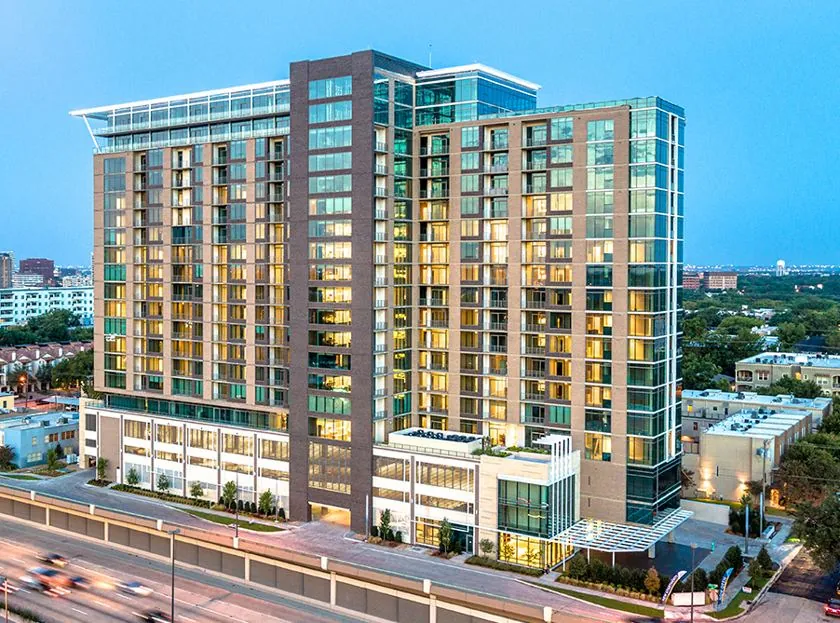
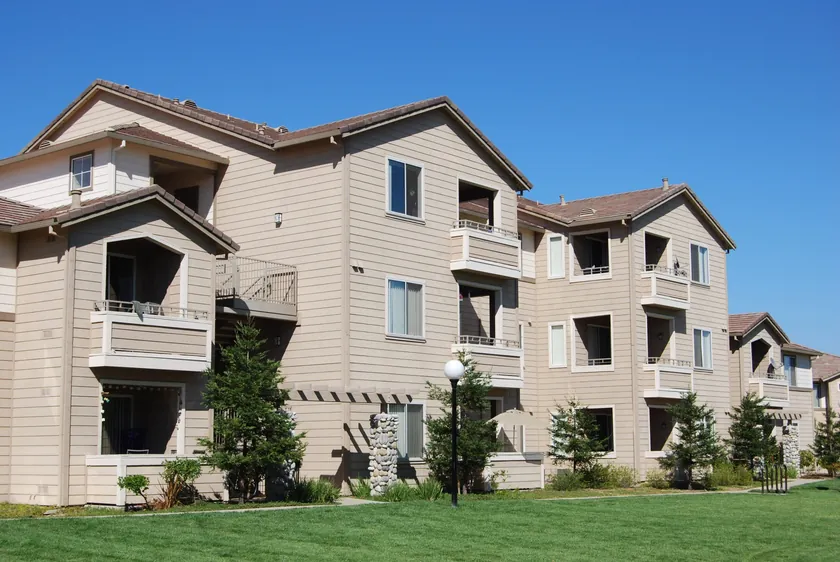
Five capital types quote most of the market.
Each one trades rate, leverage, recourse and flexibility differently. This is where each is the right starting point — and where it isn't.
If your property is stabilized and cash-flowing, Agency, CMBS and Life Insurance lenders usually offer the lowest rates but the least flexibility. If you're mid-renovation, in lease-up, or not yet cash-flowing, a Debt Fund or Bank bridge loan is typically the realistic path — at a higher rate, in exchange for speed and flexibility.
The five, side by side
Relative · not quoted terms| Interest rate | Mid |
Highest of any source |
Mid |
Lowest of any provider |
Competitive |
|---|---|---|---|---|---|
| Max leverage | 75% loan-to-cost |
Structured to plan |
70–75% loan-to-cost |
65% loan-to-cost |
80% loan-to-value |
| Recourse | Full recourse | Non-recourse | Non-recourse | Non-recourse | Non-recourse |
| Prepayment flexibility | Open or step-down |
Yield maintenance, half the term |
Two-year lockout, then defeasance |
Yield maintenance |
Yield maintenance |
| Property types | Widest, including spec development |
All, stricter on hotel and office |
Stabilized, most types |
Selective |
Multifamily only |
| Minimum loan | — | $5 million typical | $2 million | $5 million typical | $1 million |
Loan-to-cost and loan-to-value are different measures — cost basis versus appraised value — so leverage figures across columns are not directly comparable. Positions are relative to each other and drawn from the descriptions below — they are orientation, not quoted terms. A dash means the guide doesn't state a general figure; it varies by lender. Select any column to jump to that section.
Bank
The most versatile lender type — able to quote development, transitional and stabilized properties, and the most common starting point for most borrowers.
Advantages
- Flexible terms — 3, 5, 7 or 10 years
- Fixed or floating rate options
- No cash-flow sweep or reserves
- Will consider harder property types — hotels, office, special use, spec development
- Prepayment flexibility, open or step-down
- Higher leverage than most profiles — to 75% loan-to-cost, subject to a 1.25× DSCR and borrower strength
Trade-offs
- Full-recourse guaranty typically required
- Net worth equal to the loan amount, liquidity of 10%
- Upfront deposits, usually 5–10% of loan amount
- Minimal interest-only — 1–2 years for value-add plans
- Upfront fee typically 0.75–1.00%
Debt Fund
Built for value-add business plans — renovations, lease-ups, conversions — and properties not yet stabilized enough for traditional lenders. All property types considered, with stricter underwriting on hospitality and office.
Advantages
- Structures around the business plan, including capitalizing future improvement funding
- Non-recourse
- No deposit requirements
- Full-term interest-only
- Quick closes
- Usually a 3-year primary term with two 1-year extensions
Trade-offs
- Highest interest rate of all capital sources
- Yield-maintenance prepay for half the primary term — e.g. 18 months on a 3-year loan
- Higher upfront fees — ~1% origination, 1% exit, plus 0.25–0.50% per extension
CMBS / Conduit
In-place cash flow only — the property needs to be stabilized, generally 90%+ occupied — for a long-term hold investment horizon.
Advantages
- Non-recourse
- Looser borrower underwriting — less weight on guarantor strength, past bankruptcy or foreclosure
- Higher leverage — 70–75% loan-to-cost with cash-out proceeds available
- No origination fees, no deposit requirements
- Longer amortization — 30 years vs 20–25 at a bank or credit union
Trade-offs
- Minimum loan size generally $2 million and above
- Very inflexible prepayment — typically a 2-year lockout, then defeasance
- Ongoing reserves required — taxes, insurance, replacement, leasing, capex
- Cash-flow sweeps if performance declines
- Inflexible documents, and a third-party servicer can be difficult to work with
Life Insurance Company
In-place cash flow only, no heavy value-add — and the strictest underwriting of the bunch. Unlikely to quote non-grocery-anchored retail, hotels or office.
Advantages
- Non-recourse
- Lowest interest rates of any capital provider
- No origination fees, no deposit requirements
- Longer amortization — 30 years vs 20–25 at a bank or credit union
- Easier servicing — loans are kept on balance sheet
Trade-offs
- Lowest leverage of any capital provider, typically 65% loan-to-cost
- Very inflexible prepayment — yield maintenance, some step-down for extra spread
- Very selective on borrower experience and financial strength
- Very selective on property type and historical performance
- No full-term interest-only — typically 12–24 months
Agency (Fannie Mae / Freddie Mac)
Multifamily-only lending arms of the government-sponsored enterprises, Fannie Mae and Freddie Mac. All property types within multifamily are considered, with stricter underwriting on more challenging deal types.
Advantages
- Fixed and floating-rate options at competitive rates
- Willing to offer interest-only periods
- Higher leverage relative to other long-term hold products
- Willing to provide cash-out refinances
Trade-offs
- Multifamily properties only
- Stabilization requirement — typically 90% physical occupancy for 90 days before funding
- Minimum loan size generally $1 million and above
- Net worth must equal or exceed the original principal
- Liquidity of at least 9 months of debt service
- Inflexible prepayment — yield maintenance on fixed-rate products
Stop guessing which type fits.
Enter the deal once. The engine screens the database against your parameters and returns the lenders most likely to fund it, with direct contacts.
Summarized from Lender Compass' internal capital markets overview. Actual terms vary lender to lender and deal to deal — use this as a starting orientation, not a quoted term sheet.